Saturday, February 25, 2017

Saturday Stories: Facts, Evidence, and Drugs

Elizabeth Kolbert in The New Yorker on why facts don't change our minds.

David Epstein and Propublica in The Atlantic on when evidence says no, but the doctor say yes.

John LaMattina in Science on drug approval in the era of Trump.

Friday, February 24, 2017

This Hour Has 22 Minutes Meets Governor Mike Huckabee

National Canadian treasure Rick Mercer interviews Governor Mike Huckabee who congratulates Canada on what-now for today's Funny Friday?

Have a great weekend!


[h/t to friend and colleague Dr. Mario Elia]

Thursday, February 23, 2017

Industry Self-Regulation of Marketing to Kids is Worthless - McDonald's Edition

So maybe you've heard of The Canadian Children’s Food and Beverage Advertising Initiative Commitment (CAI) - it's the voluntary program that the food industry has adopted as their defense against a legislated ad ban for marketing their products to children. The thinking goes that legislated regulation (which undoubtedly will be stricter than the CAI) isn't necessary if the industry is able to police itself.

Just a few weeks ago I wrote about the Heart and Stroke Foundation's newest report card on health, The Kids Are Not Alright, which highlighted the fact that companies signed onto the CAI were serving up millions of online annual junk food advertisements to kids.

Well here's yet another example of the failure of industry self-regulation.

It was sent to me by a mom whose 2 year old came home from daycare on Valentine's day with a McDonald's coupon book.

Here are some of the coupons:

Now McDonald's is pretty clear on their CAI commitment. They committed to ensuring that 100% of their advertising to kids was for "healthy dietary choices" and/or promoting "healthy lifestyle messages" ,

Clearly these coupons don't meet either of those criteria.

And just in case you're tempted to suggest that these coupon books weren't meant for kids, you should know that the coupons are (their caplocks and bold, not mine),
"REDEEMABLE BY CHILDREN AGE 12 AND UNDER ONLY."
If we as a society want to rein in the predatory marketing practices of the food industry that target our children, we're going to need to do that ourselves as industry self-regulation continually proves itself to be worthless.

Tuesday, February 21, 2017

Running More Doesn't Burn Any Extra Overall Calories (In Mice)

In terms of the constrained energy expenditure model of physical activity (whereby beyond a certain increase in activity, total daily calorie expenditure stays the same), this small mouse study is pretty cool.

15 mice were housed in indirect calorimetry chambers that contained running wheels. The experiment included a habituation phase, then a locked wheel phase, and finally a run as much as they wanted phase.

All told, despite a doubling of wheel use, the mice' total daily energy expenditures stayed roughly the same - elevated somewhat from their wheel locked baseline, but stuck at an elevation seen with slight use.

The researchers observed a pattern they'd previously hypothesized - mice who ran more on the wheel, were less active when off the wheel. And though not measured, researchers also wondered whether increased muscle efficiencies with time might also be playing a role in the lack of increased energy expenditures.

The researchers' not-meant-for-mice conclusion echoes my confirmation bias,
"physical activity should be encouraged for its overall health benefits, while expectations concerning its role in weight loss should be kept realistic."
Exercise is primarily for health, not weight loss.

Saturday, February 18, 2017

Saturday Stories: 3 Terrific Doctors' Tales

Gabor Maté for CBC News on addiction.

That Lady Doctor on That Lady Doctor and what she does for $37.05.

Michael Lewis in Nautilus with a fascinating backgrounder on Dr. Don Redelmeier (who I was fortunate enough to briefly train with as a medical student).

Friday, February 17, 2017

Standing Desk Truths From The Family Guy

Laughed out loud while watching this week's Funny Friday.

Have a great weekend!


Wednesday, February 15, 2017

Sudbury Hospital Says Eat Blizzard Cupcakes To Support Cardiac Programs

From the Annals of Junk Food Fundraising I bring you this gem from Sudbury's Health Sciences North Foundation. Buy a half dozen Dairy Queen Blizzard cupcakes for $15 and the hospital's cardiac programs will receive $2.

Just in case you want to take the position that you'd be buying them anyhow, looking to Health Science North Foundation's Facebook page you'll see their encouragement to buy them
"for a good cause",
that you should
"#treatyoself",
and that,
"now's your chance to eat cupcakes without guilt".
Remember too, you can't buy just one, you need to buy a half dozen, and each and every one packs 240 calories along with 5 teaspoons of sugar.

That hospitals and their Foundations are comfortably shilling half a dozen cupcakes in return for $2 isn't so much reflective of incompetence but more that junk food fundraising is so normalized that no one bothers giving it a second thought.

And it's not as if this sort of fundraising can't be done right. Also for heart month, last week my inbox saw this initiative from Roots and Canada's Heart and Stroke Foundation (HSF). Buy a Roots toque for $26 and $10 will go back to the HSF. Buy a $10 bracelet and $5 goes back to the HSF.

[Thanks to RD Ashley Hurley for alerting me to the cupcake campaign]

Monday, February 13, 2017

Remember This The Next Time You Hear Soda Consumption's Going Down

Last week saw the release of yet another important initiative from Canada's Heart and Stroke Foundation - this one on sugary drinks.

Now the news often talks about how soda consumption is going down (-27% according to this report), and while it was slightly heartening to learn that juice consumption has gone down by 10%, neither are going down in a vacuum.

During that same time frame, other liquid candy sources have picked up some major steam
  • Energy drinks +638%
  • Sweetened coffees +579%
  • Flavoured water +527%
  • Drinkable yogurt +283%
  • Sweetened teas +36%
  • Flavoured milk +21%
  • Sports drinks +4%
Also shocking were the daily per capita consumption amounts - especially of the kids:
  • Children 0 – 8 years consumed 326ml/d
  • Youth 9 – 18 years consumed 578ml/d
  • Young adults 19 – 30 years consumed 504 ml/d
  • Adults 31+ years consumed 259ml/d
And you have to remember that per capita is an average per person that includes those of us whose kids consume virtually none. And when considering the incredible rise in energy drink consumption also remember that Red Bull was the 4th most commonly advertised food on the top 10 websites favoured by 2-11 year old children.

Looking to my experiences in our office's Ministry of Health funded program that works with parents of children whose weights are a concern, I can tell you that it's not at all uncommon for kids to be consuming 300 or more calories of chocolate milk and juice a day. In most of these cases, the kids were doing so consequent to their parents great intentions - intentions that have been poisoned by a national Food Guide that includes chocolate milk as a healthy dairy choice, and juice as a fruit and vegetable equivalent this despite chocolate milk being to milk what apple pies are to apples, and juice being just a flat soda pop alternative with a smattering of vitamins.

Liquid calories, especially sugary ones, are perhaps healthier diets' lowest hanging fruits. That Canada is still dithering on them, especially those that are marketed to kids as being healthy by way of the Food Guide and school milk programs, is quite unfortunate.

Saturday, February 11, 2017

Friday, February 10, 2017

Singapore's Answer to Added Sugar - Sugar Defending Darts?!

If today's Funny Friday is to be believe, Singapore is really taking the fight against added sugars seriously!

And as an aside, though I don't miss North American commercials, I may not have cancelled cable had we been living in Singapore or Japan.

Have a great weekend!


[Hat tip to blog reader Laurie for sending my way]

Wednesday, February 08, 2017

You Likely Won't Outrun Your Fork - African Edition

Thanks to RD and PhD candidate Nanci Guest for sending this new study my way.

The study, Accelerometer-measured physical activity is not associated with two-year weight change in African-origin adults from five diverse populations, followed 1,944 young adults of predominantly African descent in 5 different countries of varying degrees of socio-economic development (Ghana, South Africa, Jamaica, Seychelles and the USA). Researchers were interested in the relationship between the participants' weights and their baseline physical activity levels (as measured by 8 days worth of objective accelerometer data) over the 3 years of study.

The participants were categorized as either meeting the USA Surgeon General's recommendations for weekly physical activity (PA) of 30mins/d most days of the week or not.

The researchers were surprised to learn that the total weight gain at every site was greatest among those meeting the PA guidelines, though to be fair, the differences were minimal. For instance in the USA those meeting the PA guidelines were found to be gaining an average of roughly half a pound per year, while those not meeting them were found to be losing half a pound per year. What was clear though was that the measured PA did not appear protective vs. weight gain, and clearly not a driver of weight loss.

Researchers also explored sedentary behaviour as a separate entity and found that it too failed to correlate with weight change over time (in either direction).

All this to say, this is another paper for the pile suggesting that forks tend not to be outrun.

Monday, February 06, 2017

Study Finding It Isn't Concludes Eating Grapes Beneficial to Alzheimer's Care

I'm a gadget guy, and I regularly read a tech blog called New Atlas. Their coverage is wide-ranging, and it isn't just gadgets they cover but science-y topics as a whole.

The other day an article caught my eye. The headline read,
"Two cups of grapes a day may keep the Alzheimer's away".
Reading the piece I learned that,
"a recent study conducted by the University of California, Los Angeles indicates that consuming them (grapes) helps protect against Alzheimer's disease",
and that,
"This pilot study contributes to the growing evidence that supports a beneficial role for grapes in neurologic and cardiovascular health".
But there were some giant red flags.
  • The study involved just 10 people.
  • The study did not involve eating actual grapes.
  • The coverage did not mention whether or not those 5 people consuming freeze-dried grape powder performed differently on the battery of cognitive tests administered to them before and after the 6 month intervention.
  • The coverage credited a press release from The California Table Grape Commission as its source.
So I decided to read the study itself.

Reading it, along with its study record detail, I learned that the study was designed to determine the degree of cognitive benefit associated with the consumption of freeze dried grape powder as well as whether benefits correlated with neuro-imaging changes in the participants

The cognitive testing sure was thorough, and given there were only 5 participants in the intervention arm and 24 tests administered, the chances of one coming back with a between groups difference even just by chance was much higher. Researchers administered the following tests:
  1. Cognitive subscale/ADAS-Cog (Rosen et al., 1984)
  2. Mini-mental Status Exam/MMSE (Folstein et al., 1975)
  3. Hopkins Verbal Learning Test-Revised (Benedict et al., 1998)
  4. Benton Visual Retention Test (Benton, 1955)
  5. Rey-Osterreith Complex Figure Test delayed (Osterrieth, 1944)
  6. Boston Naming Test (Kaplan et al., 1983)
  7. Letter Fluency FAC (Strauss and Spreen, 1998)
  8. Animal naming (Goodglass et al., 1972)
  9. Stroop Interference (Golden, 1978)
  10. Trail Making Test-Part B (Reitan, 1958)
  11. Wisconsin Card Sorting Test-64 (Heaton, 1981)
  12. Speed of information processing (Trail Making Test Part A (20)
  13. WAIS-III Digital Symbol (Wechsler, 1997)
  14. WAIS-III Symbol speed (Wechsler, 1997)
  15. Complex figure test copy (Osterrieth, 1944)
  16. WAIS-III Block Design (Wechsler, 1997)
  17. WAIS-III Symbol search total (Wechsler, 1997)
  18. WAIS-III Letter-Number Sequencing (Wechsler, 1997)
  19. WAIS-III Digital Span (Wechsler, 1997)
  20. Wechsler Test of Adult Reading (Wechsler, 2001),
  21. Memory Functioning Questionnaire (Gilewski et al., 1990)
  22. Hamilton Depression Rating Scale (Hamilton, 1960)
  23. Hamilton Anxiety Rating Scale (Hamilton, 1959)
  24. The Clinician's Interview Based Impression of Change (Knopman et al., 1994)
As for the results? Even with that barrage of tests,
"No significant benefits for the active formulation arm were noted in scores on the assessments in the neuropsychological battery"
Amazingly, despite registering their trial with the stated primary outcome measure of,
"Change from baseline in neuropsychological (cognitive, functional) test results",
the authors describe their null results as being,
"not unexpected given the small sample sizes relative to large inter-individual variation on such tests."
Perhaps the most striking piece for me though was in the authors' conclusion about their study that involved the consumption of freeze-dried grape powder and demonstrated no clinical benefit despite throwing literally two dozen tests at the subjects,
"In conclusion, twice-daily consumption of table grapes was associated with significant protection from longitudinal changes in cerebral metabolism, which in turn were correlated with improvement in attention/working memory performances, consistent with a beneficial effect of daily intake of grapes with respect to preservation of metabolic activity in individuals experiencing mild cognitive decline."
Imagine my non-surprise when I came across the next line:

While I completely understand why authors funded by the California Table Grape Commission might want to make their study sound more exciting than its results would warrant, I have more difficulty understanding why journalists would choose to report on it non-critically? I mean if you're going to write a piece about it, isn't the bigger story the spin? Yesterday I asked the journalist who wrote the New Atlas piece on Twitter what made him want to cover it. Unfortunately I didn't hear back.

Saturday, February 04, 2017

Saturday Stories: Just One This Week

Because I think it's such an important read, this week I'm only posting a single story.

Here's David Frum, with this week's The Atlantic's cover story, on how Trump could build an autocracy.

Friday, February 03, 2017

Meet Trae Crowder - A Heroic Self-Proclaimed Liberal Redneck

Honestly, if you haven't already seen today's Funny Friday video, it's a must watch.

Have a great weekend!


Wednesday, February 01, 2017

Canada's Heart And Stroke Foundation's Latest Food Industry Body Slam

The Kids Are Not Alright - that's the blunt title of Canada's Heart and Stroke Foundation's (HSF) 2017 Report on the Health of Canadians, and it examines how Canada's food industry preys on our kids through marketing.

According to the HSF's review, the average Canadian child watches 2 hours of television daily and sees 4-5 food and beverage ads per hour. But of course, televisions are not a child's only screen. To dive deeper, the HSF asked Dr. Monique Potvin Kent to review the advertising on the top 10 most popular websites for children and adolescents. She set out to determine the volume of ads aired there and even she was blown away by what she found. Those 10 websites together served up over 25 million food and beverage ads to children between the ages of 2-11, and 2.5 million to adolescents aged 12-17 (the lower number for the teens reflective of the fact there were less teens visiting the sites studied, not that the sites served up fewer ads) over just one year.

While the most frequently advertised products for the most part weren't surprises (Pop Tarts, Frosted Flakes, Happy Meals and Lunchables), it was horrifying to me to learn that the 4th most frequently advertised product on the top 10 most popular web pages for 2-11 year old children was Red Bull Energy Drink (and it was the third most frequently advertised product to teens).

And of course advertising works. That's why companies spend billions of dollars a year on it. But given the known impact of advertising on kids' preferences and consumption along with the rise in their rates of diet-related chronic diseases.

It's important to note that these findings come out of an environment where industry self-regulatory efforts exist (the Canadian Children's Food and Beverage Advertising Initiative or CAI), and that fact further strengthens the HSF's strong call for the legislated removal of food and beverage marketing to children in that Potvin Kent's web survey revealed that the worst corporate offenders were CAI participants.

The well worth a read report ends with a series of expanding recommendations about what we can do as individuals and parents, what the various levels of government can do, what schools and school boards can do, as well as communities, health organizations and of course, what the food industry can do - though I'm willing to wager that without legislation it's not particularly likely that they will follow the HSF's recommendation to simply stop marketing foods and beverages to kids.

[This report continues Canada's Heart and Stroke Foundation's new path of forcefully speaking out against industry influence, a path they enabled by actively cutting their own food industry partnerships and ties.]

Monday, January 30, 2017

Knee Replacement Surgeries Should Not Be Precluded By Obesity

CC BY 3.0, https://en.wikipedia.org/w/index.php?curid=17923328
At least that's what the results of this new study would suggest.

The study looked at knee replacement outcomes, after 5 years of follow up, among 689 patients who were divided into those whose BMIs were <30, 30-35, or >35.

The findings were important and easy to describe.

While absolute outcomes were better among those with lower BMIs, the degree of improvement in quality of life and knee functionality was not different between groups.

That finding led the authors to plainly conclude,
"surgery should not be denied to patients that are obese, given that they obtained similar benefit than non-obese patients."
Over the years I've seen many patients in my office who were there because they were denied the opportunity to have a knee replacement until such time that they lost a particular amount of weight.

I've also seen patients who were told they would be denied fertility treatments, and even renal transplants, unless they lost weight.

While it is certainly the responsibility of physicians to protect their patients' safety, I welcome studies like this one, which question policies that on their surface may seem thoughtful, but when examined more carefully, may simply reflect weight bias, however well intentioned.

Saturday, January 28, 2017

Saturday Stories: Holocaust Remembrance Day, 1984, and Beginnings

Hugo Rifkind for The Holocaust Educational Trust Blog with a powerful piece, especially considering what's going on in the world, on why we must never forget the Holocaust.

Michiko Kakutani for the New York Times on why 1984 is a 2017 must read.

Julie Zauzmer for The Washington Post on how it begins with words, not killing - another important read for 2017.

Friday, January 27, 2017

Was Press Secretary Spicer A German Open Air Bus Tour Guide?

I can't tell for sure, but it sure sounds a lot like him.

Thanks to Dr. Dylan MacKay for sharing today's gem of a Funny Friday

Have a great weekend!


Wednesday, January 25, 2017

First Mood. Then Weight. #BellLetsTalk

People often come to me wanting to lose weight or improve their lifestyle, but their moods are anything but well.

Sometimes, when I ask them about it, they'll say that their weight is what they think is causing them to struggle with depression or anxiety.

I always tell them the same thing.

Mood comes first.

Intentional weight loss requires the very things that mood disturbances often preclude - the ability to consistently, plan, organize, and motivate. Setting yourself up to struggle with weight loss by attempting to affect intentional changes when your mood is squarely in the way is not only unfair, it might make matters worse by giving you something to feel guilty about when you're understandably and realistically challenged. And it's also important to note that your mental health is far more important than your weight.

So regardless of your weight, whether its working with your family physician, your employee assistance program, reading books, talking to friends, or looking into community based counselling resources (many of which offer sliding scales for payment), mental health should be your first priority.

Sometimes I use a running analogy.

You can't start work on learning how to run if your ankle's sprained to begin with.

First you work on your ankle. Then you learn to run.

Same here.

First mood. Then weight.

(And remember, for every #BellLetsTalk tweet and Facebook share today, Bell will donate a nickel towards mental health. And yes, it's marketing for them, but unlike hospitals raising money with cookies, telecommunication does not contribute to the burden of societal illness or promote an unhealthy lifestyle - so tweet and share away!)

Monday, January 23, 2017

$0.25 Per Cookie Supporting A Kids Hospital Is Marketing, Not Philanthropy

Yet another in the ugly parade of questionable hospital based junk food fundraising is this campaign being promoted by the Mary Bridge Children's Hospital.

Each cookie packs more calories than a Snickers Bar along with 7.5 teaspoons of primarily added sugar - 1.5 teaspoons more than the World Health Organizations recommended daily maximum.

While I'm not sure there are dollar values that justify a hospital encouraging the consumption of fast food and cookies in the name of fundraising, a quarter a cookie as a return is pretty difficult to defend.

But no one says boo. Because junk food fundraising is considered wholly normal.

It shouldn't be.

(And if it were really about philanthropy and not marketing, Chick-Fil-A would simply cut and send a cheque)

[Hat tip to Brian from Facebook who sent the poster my way]

Saturday, January 21, 2017

Saturday Stories: Trolls, Trump Truth, and One Strange Story

Lindy West in The Guardian on why she's decided to leave Twitter for the trolls.

Eliot A. Cohen in The American Interest on telling the truth in the age of Trump.

Alison McCook in Science with a bonkers story about an out of control disagreement at Harvard.

[And if you don't follow me on Twitter or Facebook, Amby Burfoot published a very kind piece on our office in The Washington Post (but one error in it - we do keep food diaries and track things like calories - but we don't impose artificially scoldy ceilings with them)]

Friday, January 20, 2017

Somehow This Video Seemed Appropriate To Today's Events

Though I'm not sure how funny the next few years are going to be.

Good luck to us all.

Have a great weekend!


Thursday, January 19, 2017

Another RCT Where Revealing Genetic Risk Failed To Inspire Behaviour Change

The concept is clear - tell people what they're genetically at risk of developing and see them change their behaviours to encourage prevention as a consequence. It's a concept that in large part is fuelling the personalized medicine hype.

It's just that it doesn't seem to happen.

My friend Tim Caulfield has written about this extensively, including in this piece last year in The Atlantic, and now another study has come out to add to the pile of disappointments.

Published in PLoS in late November, the study looked at whether or not randomly assigning patients to receive genetic and phenotypic risk assessments regarding their potential future development of type 2 diabetes would change their behaviours as compared to those randomized to receive general advice.

What they found wasn't exciting. The addition of genetic testing information to lifestyle advice did nothing to increase physical activity, diet, weight, worry, or anxiety in the short term in those tested.

And while the researchers described the short duration of follow up as a weakness (it was 8 weeks), I think it might just as easily be describable as a strength in that one could argue that a person would be most likely to affect change while the iron of new information was hot, and that here, where no changes were observed immediately post risk provision, is more damning than would be demonstrating that changes dissipate with time.

From a clinical perspective, the other question that needs to be answered is whether or not the degree of change, if there were change, consequent to the inclusion of genetic testing to personalized, but not genetically informed, nutrition advice, would be superior? Putting this another way, if genetic testing affected change, would the changes it inspired be of greater clinical benefit than would healthy living advice provided by RDs and tailored, non-genetically, but certainly individually, to the person sitting in front of them?

And it would seem that's a fair thought given this quote by the founder and chief science officer of a company selling these sorts of nutrition related genetic tests who told the Wall Street Journal,
"For people who already eat a healthy diet, nutritional genetic testing might not be that useful"
All this to say, if you're keen for change, and if you have the money to spend on improving your health and diet, and unless you can afford both and that you also recognize these are very early days for nutritional genomics, save your blood and hire an RD to work with you on broader changes geared to help you find your way to a healthy diet.

(Disclosure: Though we could, our office doesn't offer nutritional genetic testing, but we do offer RD counselling)

[And if you're interested in another take on this industry, here's the piece Julia Belluz published about it yesterday]

Tuesday, January 17, 2017

School-Based Obesity Prevention Policies Don't Up Eating Disorder Risk

One of the worries surrounding school based teaching on obesity prevention is that doing so will lead exposed students to eating disorders and/or unhealthy weight control behaviours.

To date, there hasn't been much research one way or the other to either support or refute that concern, but a recent paper published ahead of print in the Journal of the Academy of Nutrition and Dietetics is reassuring.

The study examined whether the implementation of school obesity prevention policies between 2008-2010 in Minnesota public secondary schools had any impact on the prevalence of students' weight control behaviours through 2010.

Hearteningly, not only wasn't there an increase in unhealthy behaviours following the launch of school based teaching around obesity, but there may have been a decrease, with researchers describing that those schools that specifically included the topic of eating disorders in their health education curriculum showed an inverse association with school level prevalence of any extreme weight control behaviours.

Not teaching kids about health seems backwards to me, and it's nice to have data to support the safety of doing so. Without exception, care needs to be taken in terms of what and how these topics are taught, but given the rise and risks of chronic, non-communicable, diet-related, diseases in children, hamstringing kids by ignoring relevant teaching and discussion won't do them any favours, while this study suggests that teaching them might.

Looking forward to further research on this, and hopefully too, surveillance that includes whether or not these sorts of initiatives increase, decrease, or don't affect, weight-based in-school bullying.

[And just a correction from yesterday's post. Health Canada's new labeling law, when considering products with small serving sizes, would instead use a 50g reference for determination of a "high in sugar" label and hence Nutella will indeed be "high in sugar". Sorry for the error!]

Saturday, January 14, 2017

Saturday Stories: Russian Advice, One Weird Trick, and Supplements

Alexey Kovalev, in Medium, with his advice as a Russian journalist as to what journalists in post-Trump America should expect.

Patrick Mustain in The Daily Beast on the one weird trick that gave us Donald Trump.

Rebecca Robbins in Stat on the wild, wild, West that is the supplement industry.

[And if you don't follow me on Twitter or Facebook, here's my contribution to the online sugar debate (other debaters include Gary Taubes, Stephan Guyenet, and Terence Kealey)]

Friday, January 13, 2017

When Everything Comes Up Green Day

Today's Funny Friday proves that apparently you can sing Green Day's Good Riddance to pretty much any tune.

Have a great weekend!


Wednesday, January 11, 2017

A Must Read Guest Posting Apology

Yesterday I read a remarkable open letter of apology on Reddit from RoundRobinator. It was written by a man who was once regularly engaged in fat shaming and stereotyping, who following his own weight gain, was fat shamed himself. I asked him if he'd be willing to let me post it here, and he graciously agreed. It's a remarkable read.
I am the one who was giving you dirty looks in the grocery store.

I am the one who rolled their eyes at you in the restaurant.

I am the one who shared that insensitive meme.

I am the one who wouldn't play with you in elementary school, teased you in middle school, and pretended you didn't exist in high school.

I am the one telling you it is your fault. That you're disgusting and you're just lazy.

I have trolled this very subreddit before.

But I'm not anymore.

I took for granted being thin my whole life. I came from an active family, my mom was home to cook for us kids every night, and I was involved in sports from the time I could walk because that's just what I was told boys did.

I played varsity hockey all throughout high school, when I graduated I took a very physical job that kept me up and moving 8 to 10 hours a day. I only had time to drink coffee for breakfast, 20 minutes to inhale a burrito at lunch, then ate as big a dinner as I wanted plus a couple sodas and if it was the weekend more than a couple of beers.

I did not understand how someone becomes fat, I thought I knew beyond a shadow of a doubt that it was a conscious decision people made. Having this thin privilege handed to me my entire life I thought weight loss was like any other goal, it just took organization and willpower.

I hated fat people. I was enraged that my taxes were going up because they were using the healthcare dollars. I felt cheated when one sat next to me on the bus and spilled over into my seat. I didn't want my daughter to have overweight friends because I thought they were a bad influence. I didn't hire them at work because I thought they were weak and unmotivated.

Then, two years ago next week, I was in an emergency room being diagnosed with a complete rupture of my left Achilles' tendon.

It happened on the job, and they were so glad I wasn't suing that they didn't fight me on the six months of workers comp (an Achilles rupture is usually 4-6 months of recovery.)

Once the worst of the pain subsided, I was almost excited to be injured. I was getting paid time off, in bed all day, doing whatever I wanted.

And what I wanted to do was eat. All my hobbies are physical, and I had nothing to do with myself. I was at home all day, on bed rest for the first few weeks, then allowed limited movement as long as it didn't disrupt my cast.

I didn't realize how much more I'd been eating. Instead of coffee for breakfast I was having a couple eggs and a package of toasted waffles just to kill more time before I went back into my injury limbo. Not three hours later I'd make myself a big sandwich, with soda and chips, I'd eat dinner with my family but some nights it was so uncomfortable sleeping in my bulky cast that I'd end up eating a second dinner. You can see where I'm going with this.

It was when they decided I needed surgery, about three months after the injury, that I got the first wake up call. At my pre-op appointment, they weighed me. I went from being 170 pounds to 200. It had happened so gradually. I stayed in my pajamas all day. I'd only been leaving the house to go to PT or the doctor, and I wore sweatpants to those appointments. Sure I noticed my stomach was looser and my clothes were tighter, but I thought it was 10-15 pounds max, injury weight that would melt off when I got back to work. My doctors cautioned me that that wasn't the case.

But I was in denial. I shrugged it off and told myself once I was healed it would fall off without any effort on my part. I also told myself I'd cut back on the sweets.

I don't think I even made it to the end of that day before I told myself "you're injured, you shouldn't be stressing yourself out with crazy diets."

At the surgery I was 218. I told myself it was because the surgery was later in the day than my pre op appointment had been.

Recovery time, more denial, more recovery time, fast forward seven months after my injury, and I'm cleared to transition back in to work.

By this time I'd bought all new bigger clothes under the guise of these being my "injury clothes". I even joked that they were my "manternity" clothing.

But my coffee in the morning wasn't satiating me anymore. I found myself agitated, hungry, disorganized. I found myself stopping for Dunkin Donuts on the way in to work. Then my regular chicken burrito at lunch felt sparse. I missed my thick sandwiches, bags of chips, and limitless soda. Dinner, the same cycle. I told myself it was just the stress of transitioning back in to work, and once things calmed down I'd be back to normal.

Then things weren't going so well at work. My numbers dropped, I couldn't keep up with the other guys in my pod, and I was switched to desk work until I was "fully recuperated." If this injury weren't the result of their shitty protocols, I'd have likely been axed on the spot.

I was called in to an important meeting one morning and tried to button my shirt. Couldn't do it. And this was my "manternity" shirt. I couldn't even remember when I'd stopped buttoning my shirt like I used to do every morning.

I told myself I was going to start running. I had a 6 minute mile in high school, and I ran a marathon in my twenties. After a quarter of a mile I was in more pain than I was at the end of that marathon. Not in my Achilles' tendon either. My chest was burning, there was a radiating pain in my knees, my feet felt like I'd been running barefoot on gravel. But I told myself "Don't be a p*ssy, play through the pain. You've got to get in shape."

I'd gone out with what I thought was a conservative goal of running three miles. By the time I hit a mile, which took me 11 minutes, I was in so much pain I could barely think straight. And this is coming from someone who had the presence of mind to play "I Spy" with a three year old while getting a knuckles tattoo.

I was so out of breath I genuinely thought I was going in to anaphylactic shock (which I've experienced for real three times before).

It took me twenty minutes to even feel capable of walking home.

I thought it had to be a medical condition. Maybe a side effect of having taken so many anti inflammatory drugs during the recovery process. I thought my kidneys might be failing. I went to the doctor the very next day.

And she told me in no uncertain terms "The only thing wrong with you is that you're overweight. Running is not only going to be exceedingly difficult, but dangerous for your joints. Start with walking and build up to running. And I'd recommend you see a dietician sooner than later."

I thought "I don't need a dietician, weight loss is just about sticking it out." I went home and got rid of all the junk, I gave away all my Dunkin Donuts cards, and bought heaps of fruit and vegetables, I ate a boiled chicken breast and steamed broccoli for dinner and I wrote down the calories. And I thought "This is easy. See? Pathetic fat losers just can't put down the fork because they care more about their superficial wants than their health. Well, a strong guy like me isn't going to fall for that. I've been to hell and back in my lifetime, this is nothing."

3am, after a restless night, I got in my car and drove half an hour out of town to buy Chips Ahoy cookies. And I ate them alone in my truck. Not one or two of them. All of them. With a half liter of coke. I looked up and I couldn't even remember the exact moment I decided to go to the store or exactly how I'd talked myself into it. It was just a visceral frenzy.

Then I started to realize I might have a very real problem.

Queue a year and a few months of starting exercise programs and stopping exercise programs because of achy pains, not having the time between all my work (which, again, is behind a desk now), and discouragement from not seeing results. And fad diets, and quitting cold turkey, and weaning off, only to be hit with a craving so strong or something so stressful I blindly dive right back into it. And it wasn't a choice and it wasn't intentional and I didn't feel like I'd gamed the system or proud of myself. I was awash in guilt and shame and downright misery. At some junctures it was a guilt as powerful as I'd felt wen my mom's house was foreclosed on because I didn't make enough to take care of my family and her. It cut so deep I would have done almost anything to stop it.

I kept telling myself I could do this on my own and it was a test of strength and nothing I couldn't handle.

I didn't notice the subtle shifts in attitude at first.

I started encouraging my daughter to invite bigger kids to play with her and her friends, invite them to her birthday, and pick them for teams.

I'd see those people sharing stupid memes about fat people on the internet and think "Jesus Christ, and you call yourself an adult?" Then I saw a particularly ignorant "shock value" fat people meme, and decided I was going to unfriend whoever had shared it, so I clicked on it. It was a Facebook "memory" of a post I'd shared three years prior. I went and deleted it off my timeline reassuring myself I'd made up for that by now.

But the tipping point came one week ago.

I was power walking through the neighborhood, sweating bullets, feeling really proud of myself for not stopping for a breather in almost twenty minutes, when some guy drove by and made pig noises out his window at me. I was broken. I've been in bar fights, I've been hospitalized, I grew up with not one but two abusive stepfathers, I'm a fighter. But I was so hurt and broken and embarrassed that I just stood there. If some guy had done that to me when I was thin, there's a good chance I'd have hurled a rock at their window. But I couldn't think of anything to say or do because this time, on some level, I agreed with them.

And that's when I realized that was insane. Because of course I was trying my hardest. I'd been trying for years. I had to sacrifice a job I love, I haven't had sex in months, I buy all my clothes online, I dread going out into public, I try any diet that sounds promising, I undergo intense physical and psychological pain in an effort to get back in shape. Who is this guy to judge me? But I was that guy. I've changed but I'm still the same person who did those things in the past, even if I'd never dare to do them now.

I went to a dietitian today. It was the first time I'd stepped on a scale without diverting my eyes since my surgery. The few times nurses had weighed me I told them I wasn't interested in what the number was. And I stopped seeing the doctor long enough ago that I can't pinpoint exactly when. I have an appointment with her next week at the advice of the dieititian.

I'm 289 pounds.

And now, in this same subreddit where my old account, that was so toxic that I've since taken it down, was banned from, I'm coming for help.

Call it karma, it probably is. I don't know if you believe in a God, but I do, I think he did this intentionally because of the unchristian way I acted towards others. I was sick, I was nasty, I was the disgusting one.

I know you fight. I know you're not weak, you're the opposite, you're the strongest kind of person out there.

I am sorry for every look I every shot you. For anything I ever muttered under my breath. For every time I changed seats because of you. For the names I called you in school and for the dance I wouldn't be your date for. You deserved better than me anyways.

I apologize to each and every one of you who has ever been unfortunate enough to cross paths with a volatile prick like me who sought to make your personal private health concerns their business.

As devastating as this has been for me, a 6'2 guy with a deep voice, shoulder length beard and tattoos, I cannot comprehend how difficult and damaging it was for anyone who has to cope with this publicly accepted, encouraged even, abuse, as an innocent defenseless child.

I know now that you are so much more than your weight. I'm the weak one. I'm the wrong one. Now I'm the fat one.

And in all the ways that matter I'm still the same guy. I'm no longer the ignorant, mouthy, judgmental, abusive guy I was. But I'm the same loving father I was as a thin guy. I've got the same powerhouse work ethic I did as a thin guy. I'm still as much of a dog lover as I was as a thin guy. I've got the same level of faith, if not stronger, than I did as a thin guy. All the fundamental pieces of my identity and all the good things about me remain the same at any weight. And I was too blind to see it before, there is no such thing as a "fat person" there are only "people who are fat". That doesn't override or in any way undermine the other parts of their identity.

Of course I don't want to be this way and I didn't choose it. But even if someone does decide they want to stay fat, and they choose to accept it, you won't hear any judgement from me. Because this life is HARD. It is not the easy way out. It's the hardest I've ever worked and the most emotionally heightened state I've ever lived in in my entire life. I see now more than ever that what you do with your body is none of my business and I can't even begin to understand where you're coming from or what other factors are at play in your life.

I've been the worst kind of person and have undoubtably hurt people in ways I will never realistically comprehend. I'm a changed man now but that doesn't change the past and my actions.
`
Don't forgive me, I don't deserve forgiveness. I don't and nobody who acts like I did does. Don't forgive them, write them off. They don't deserve your attention, your wholeness, your love, or your time. They're ugly on the inside. I'm getting my soul in shape alongside all this, and I've done a lot of good work, and I've got a ways to go. But just..... just know that for whatever it is worth I was wrong. And I am sorry.

I've got a new eating plan from the nutritionist and an exercise plan too. And I'm going to work it as hard as I can. And even if I get to be 160 pounds of rock solid muscle and go on to win an iron man challenge, I'll never be stronger than I had to be when I was fat.

Monday, January 09, 2017

Fisher-Price's New Kids' "Smart Cycle" Is All Sorts Of Huh?

With press coverage extolling that they can use it to "burn off the sugar", or "battle obesity" last week Fisher-Price released their so-called "Smart Cycle" geared towards kids between the ages of 3-6.

It's a stationary cycle with a built in stand for a tablet so that kids can play "learning" games while they sit in one indoor spot pedalling.

Because toddlers aren't much for active play? Because electronics need to be part of every single aspect of even the youngest child's life? Because little kids should be made to feel like they need to burn off their calories?

If you want your toddler to be more involved in active play, play with them. And if you're genuinely unable to (due to time/work/health/whatever), and you've got the money to spend on a "Smart Cycle" and a tablet, maybe invest in kids' shoes, outdoor clothes, actual bikes, jump ropes, balls, or really anything that gets them moving, having fun, improving their physical literacy, and developing their imaginations.

Saturday, January 07, 2017

Saturday Stories: Mercola, Disappointments, and Acute Flaccid Myelitis

Probably not an actual picture of Dr. Mercola
Kate Knibbs for The Ringer with an absolutely must read article on Dr. Joseph Mercola - the "most honest man in medicine".

A rare funny (and short) Saturday Story from Bess Kalb in The New Yorker with "a selection of the worst 30 under 30".

Soumya Karlamangla in The Los Angeles Times with the sad and awful story of a new polio-like illness that's appearing in children.

Friday, January 06, 2017

"They Don't Ever Go Away" - Parenthood in 34 Seconds

Every parent out there will be able to relate to today's Funny Friday video.

Have a great weekend!


Thursday, January 05, 2017

Is Health Canada About To Allow Wonder Bread To Market Itself As A Health Food?

Last month Health Canada announced their finalized version of the changes Canadians can expect to see, 5 years from now, on our nutrition fact panels.

And while some of the changes are laudable, the changes to how our labels report sugar appear confusing.

Rather than highlight the distinction between total sugars and added sugars, a distinction that the World Health Organization, Canada's Heart and Stroke Foundation, the American Heart Association, the American Academy of Pediatrics, the Institute of Medicine, and many other public health authorities believe to be the crucial distinction as would pertain to the impact of sugar on our development of chronic diet related diseases, Health Canada instead declined to add a line expressly highlighting a food's added sugar content. Instead, Health Canada elected to provide a line for total sugars, and to it attribute a %DV (percent daily value) measure derived from a recommendation of a total maximal daily limit of 100 grams of sugar (or 20% of total daily energy for a diet of 2,000 calories).

In a consultation that I participated in at Health Canada, they explained to us that their rationale for not having an "added" or "free" sugar line was regulatory in nature. They reported that it would be impossible for Health Canada to include a line on added sugars because if there were a regulatory challenge, a laboratory would be unable to differentiate between a product's sugar source and would only be able to report total sugar and not the percentage of sugar added to said product.

This strikes me as something of a cop out as not only do we currently have other labeling features that aren't testable in laboratory settings (Halal, Kosher, etc), but it is far from impossible to compare a product's total sugar and subtract that which would be expected to be intrinsic to a product's ingredients. It's also clearly not impossible as evidenced by the fact that America's Food and Drug Administration has announced that a line for added sugars will be rolled out to their nutrition fact panels (and required to be adopted in 2 years, rather than Health Canada's 5).

As to why this matters, beyond stepping away from the recommendations of other jurisdictions and public health authorities, it's deceptive.

For instance, if you were considering a 12oz can of Coca-Cola, if an added sugars %DV was set at 10% of total daily calories (as per pretty much everyone's recommendations), the can's label would tell you that it contained 78% of your recommended total daily value, but with Health Canada's new label, it'll tell you it contains a far less awful sounding 39% of your total daily sugar.

But there's more. And it's worse. There's a far more worrisome sugar labeling initiative being considered by Health Canada. In what will undoubtedly make matters worse for consumers, a "low in sugars" claim is being considered whereby the food industry will be allowed to market their products as healthful if they
"have no more than 5 grams sugars (a) per reference amount and per serving, (b) per 50 grams if the reference amount is small (i.e., 30 grams or 30 millilitres or less), or (c) per 100 grams if the food is a prepackaged meal."
On that basis Wonder Bread would be allowed to promote itself as "low in sugars", and so too will scads of other ultra-processed foods.

All this leaves me scratching my head and wondering whose interests are best served by these changes - the public, or industry?

Tuesday, January 03, 2017

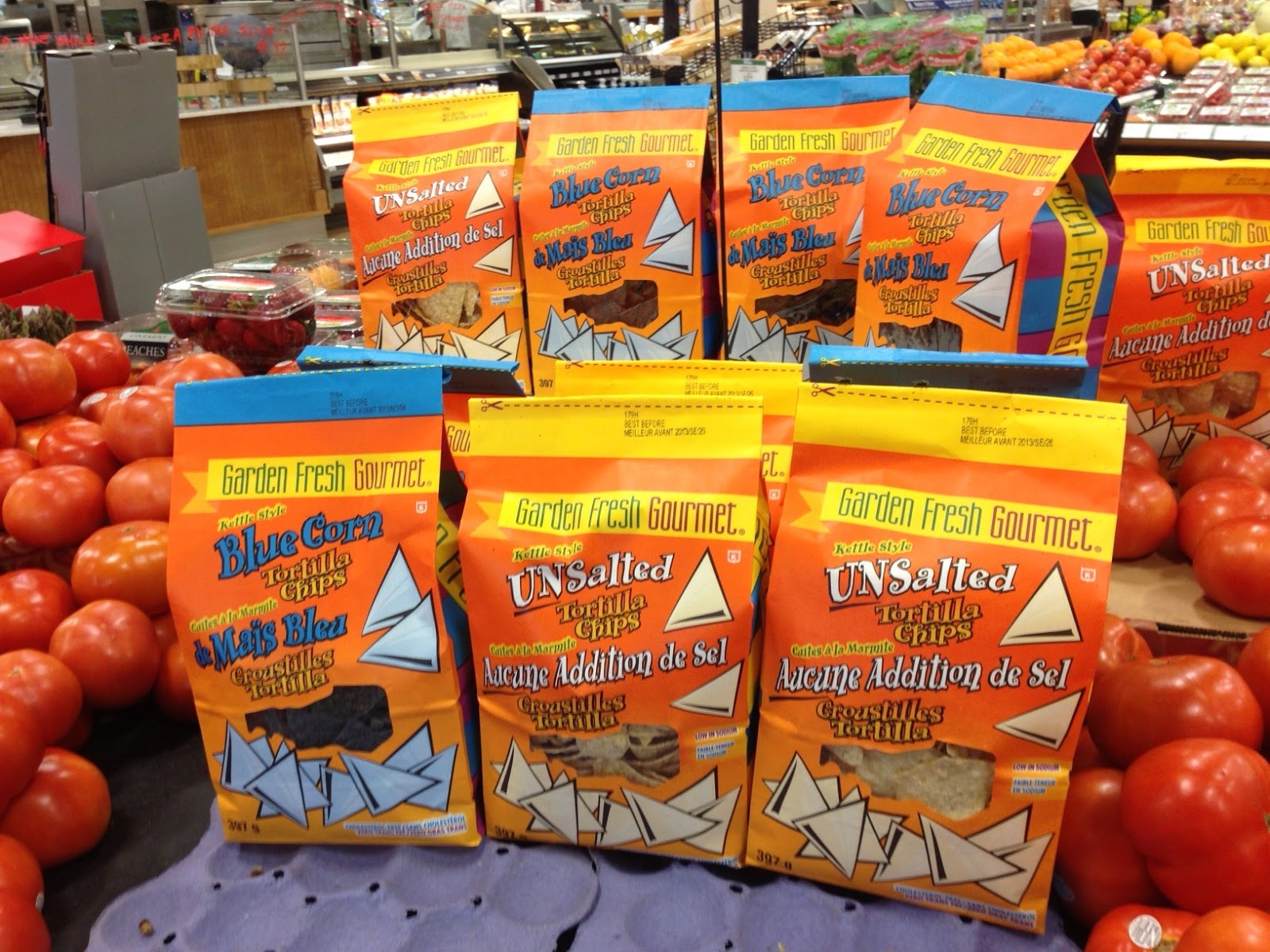
Why "Just Shop the Periphery" Isn't Necessarily Great Advice - A Photo Essay

During my annual winter blogging break, I'll be posting some of my favourites from back in 2013.